SD

Sam Deegan

PhD in Economics — Thesis Submitted, Viva October 2026
University College Dublin • UCD Geary Institute for Public Policy

Bank branch networks transmit institution-level shocks into the economy, creating geographic variation in exposure. My research exploits the geographic and organisational structure of banks to examine financial stability and credit intermediation. I submitted my PhD in Economics at University College Dublin in September 2026, with my viva in October, and I am on the job market for the 2026–2027 academic year.

🎓Education

PhD in Economics

University College Dublin

School of Economics
Essays on Bank Networks, Financial Stability, and Spatial Transmission
Sep 2022 – Oct 2026 • Submitted Sep 2026
MSc in Quantitative Economics

University College Dublin

School of Economics
Sep 2020 – Sep 2021
MBS in Economics and Finance

South East Technological University

School of Business
Sep 2014 – Sep 2015

✨Research Interests

Banking & Financial Stability Macro-Finance Regional & Spatial Macroeconomics Financial Regulation Applied & Spatial Econometrics

📊My Research

Banks are multi-market firms. Branch networks channel shocks into the economy, and because branches are slow to open and close, these frictions transmit shocks independently of bank characteristics, creating geographic variation. My work exploits that geographic and organisational structure for identification.

My job market paper, Failure in the Margins, asks what a bank failure does to the counties the failed bank served. Bank branch locations are not random: networks are assembled out of neighbouring markets, so one bank failure exposes a block of adjacent counties simultaneously. Estimates that omit exposure to neighbouring markets overstate the direct effect of a bank failure by two-fifths, and understate the total effect in crisis periods, when failures are less isolated and adjacent counties receive direct and indirect treatment at once.

Stress Tests on Main Street examines whether bank stress testing reduces income growth. It traces a national treatment rule based on bank size through branch networks to the counties those banks serve, and asks whether the more exposed counties grew more slowly. They did not: while credit from treated banks slowed, aggregate credit at county level held steady.

Consolidation-Driven De-Branching exploits FDIC resolution auctions, where a failed bank passes whole to one sealed bidder within days, to separate consolidation from technology and fragility. Where the acquirer already operated, the network sheds nine-tenths of the branches the failed bank brought; where it was new to the county, it keeps them. Which counties keep their branches is settled at the bid deadline, by an overlap the FDIC observes and its least-cost test does not price.

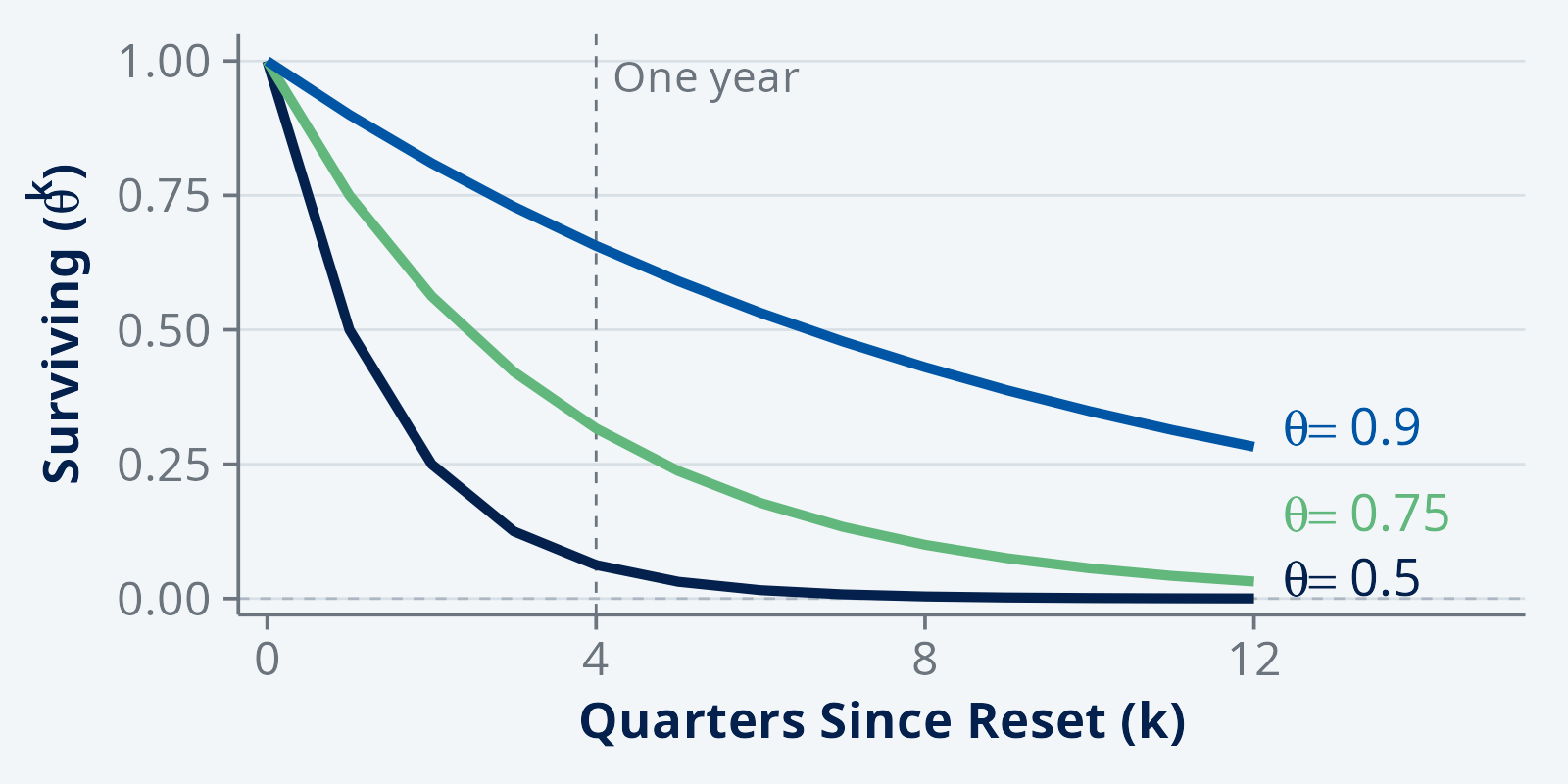
I am currently developing a gravity model of bank lending with Steven Ongena (University of Zurich), built on branch networks, to estimate the decay rate of credit, how that decay differs across banks and their lending technologies, and how evenly credit is distributed across the markets a bank serves. A second strand will examine how technology is changing banking and the role of branch networks within it.
📚Featured Papers

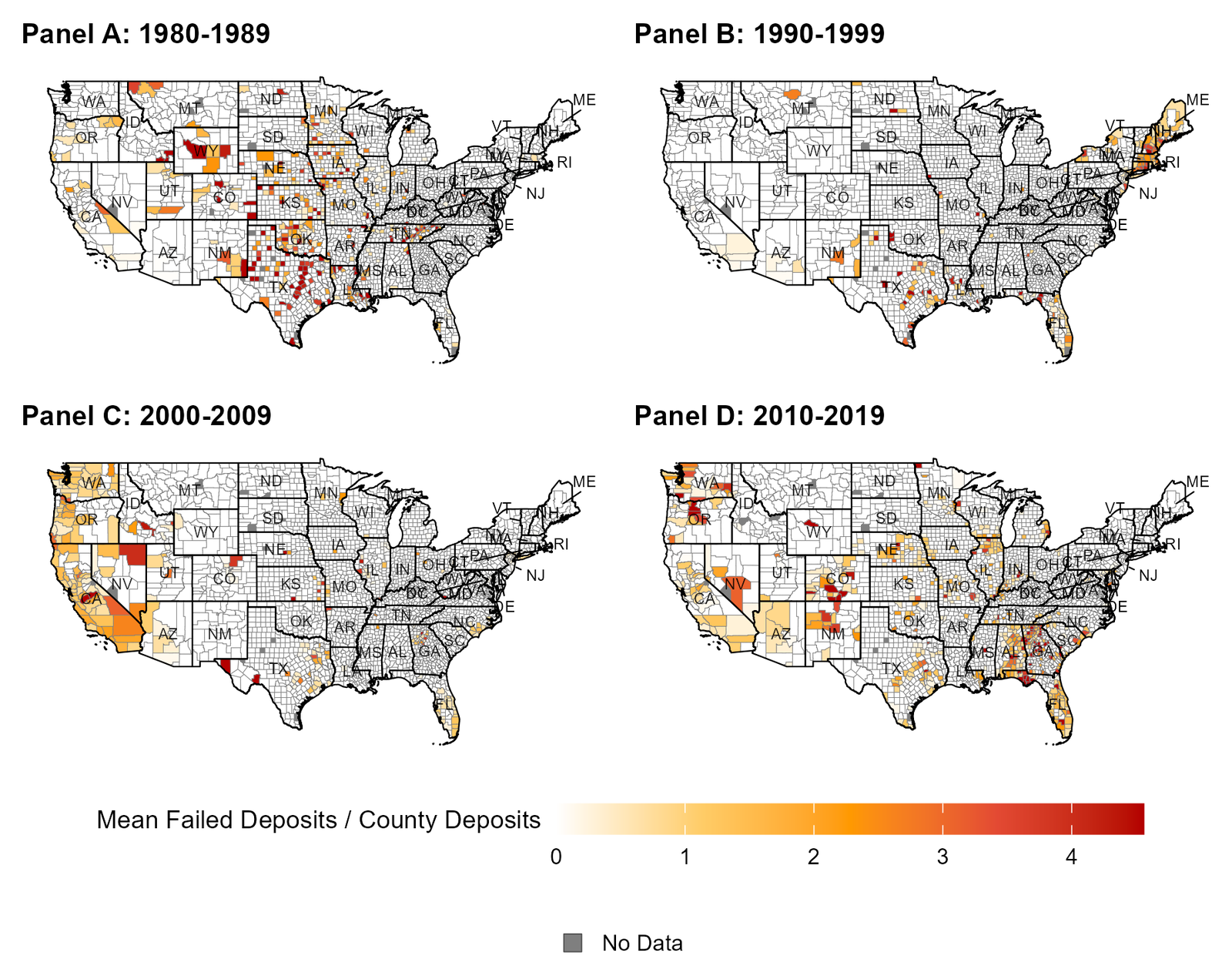
County maps of mean failed deposits as a share of county deposits, by decade from 1980 to 2019

Failure in the Margins: Local Exposure to Non-local Bank Distress

Maps U.S. bank failures to counties through pre-failure branch footprints. Because networks are contiguous, omitting neighbours’ exposure inflates the direct effect by two-fifths and discards a larger indirect one. At median exposure, annual income growth falls 0.22pp through a county’s own exposure and 0.10pp through its neighbours’.

Deegan, S. (2026)
Job Market Paper Banking
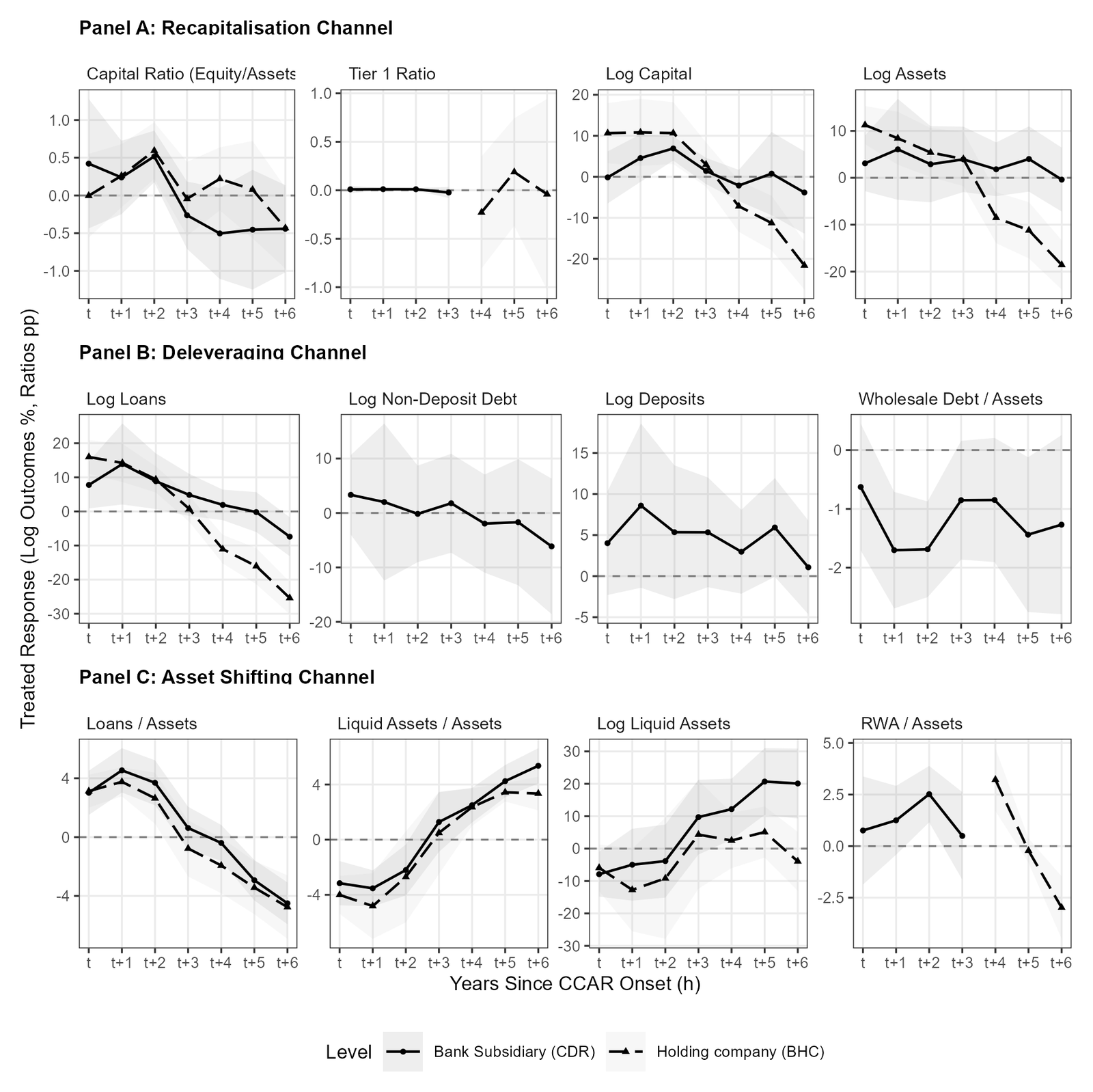
Event-study responses at the bank subsidiary and the holding company after CCAR onset, across the recapitalisation, deleveraging and asset-shifting channels

Stress Tests on Main Street: Tracing Holding-Company Exposure through Branch Networks

Do bank stress tests reduce growth? They do not. Counties most exposed to the 2011 introduction of CCAR carry no income penalty, and losses of the size the credit-supply critique implies are ruled out. The holding company deleverages; the commercial bank holds its size and rotates out of lending into liquid assets.

Deegan, S. (2026)
Under Review Stress Testing

🎓Teaching Resources

Lecture Materials

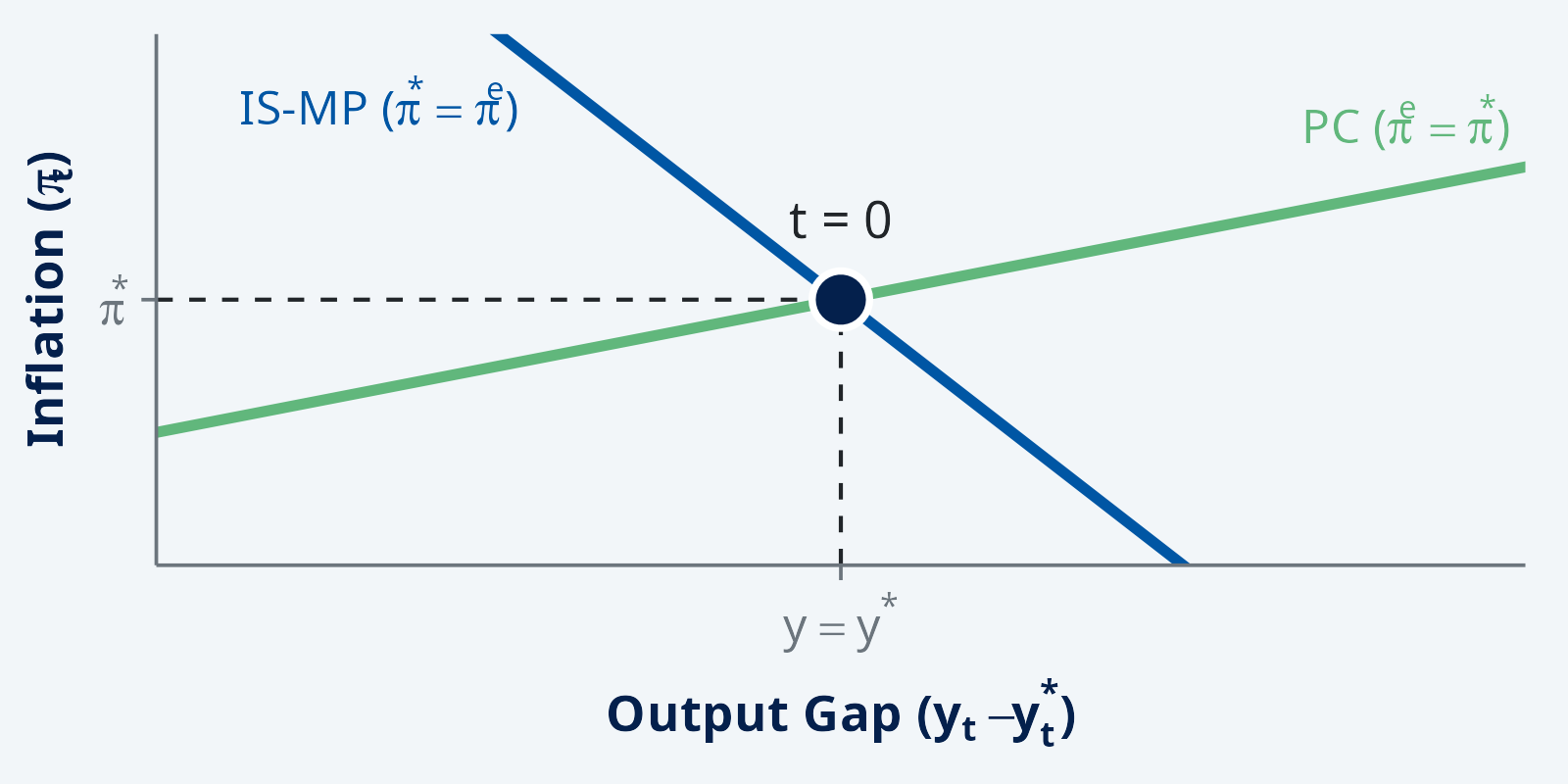
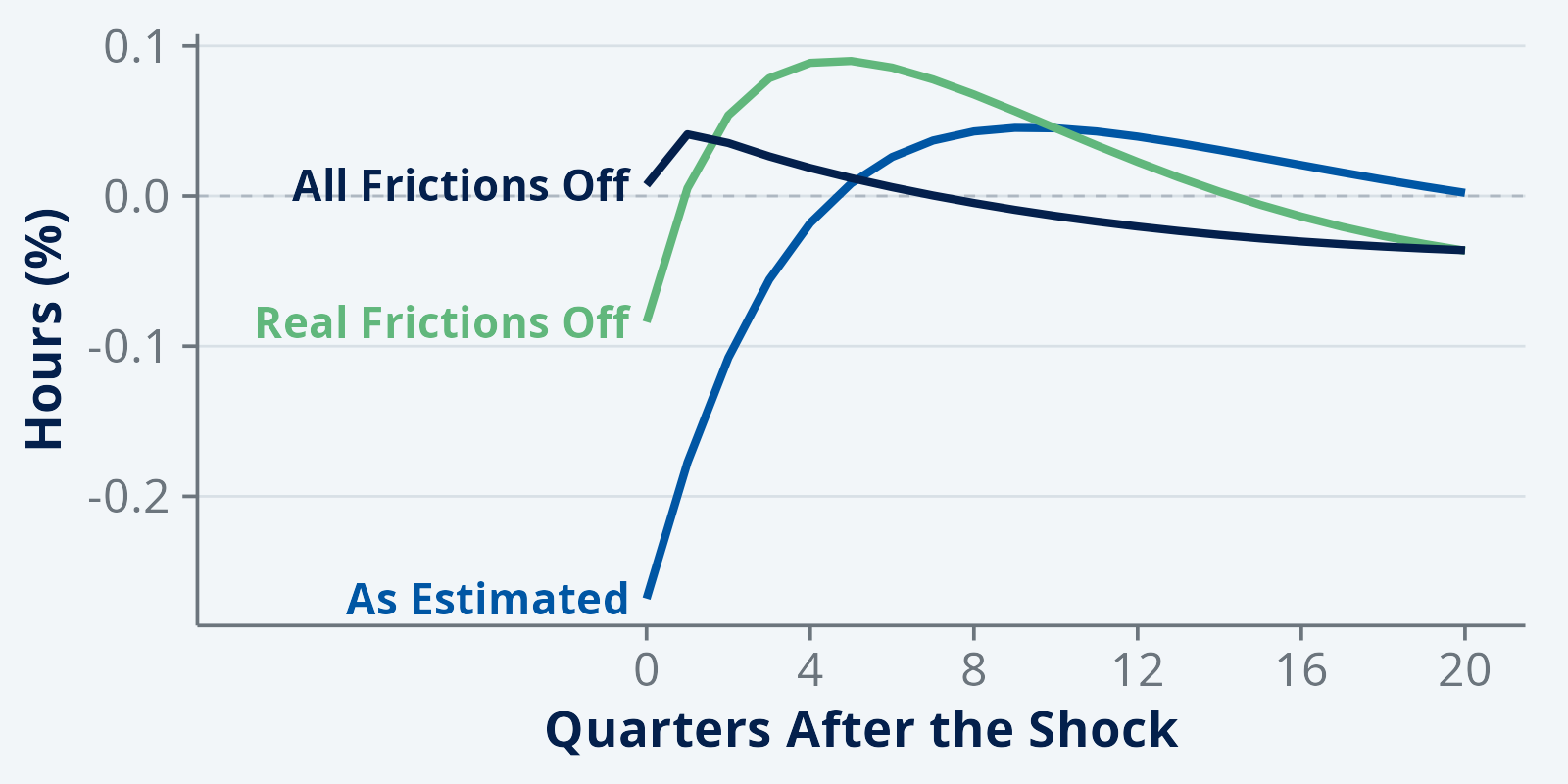
Complete lecture decks for three modules: macroeconomics, advanced macroeconomics and econometrics. Free to teach from and adapt.

💬Get in Touch

Email
sam.deegan@ucdconnect.ie
Phone
(+353) 087 344 8748
Office
UCD Geary Institute for Public Policy
University College Dublin
Belfield
Dublin 4
D04 N9Y1
Ireland